
Beginner German
Build the first practical foundations: pronunciation, greetings, personal information, numbers, daily routines, simple questions and short everyday exchanges.
German syllabus
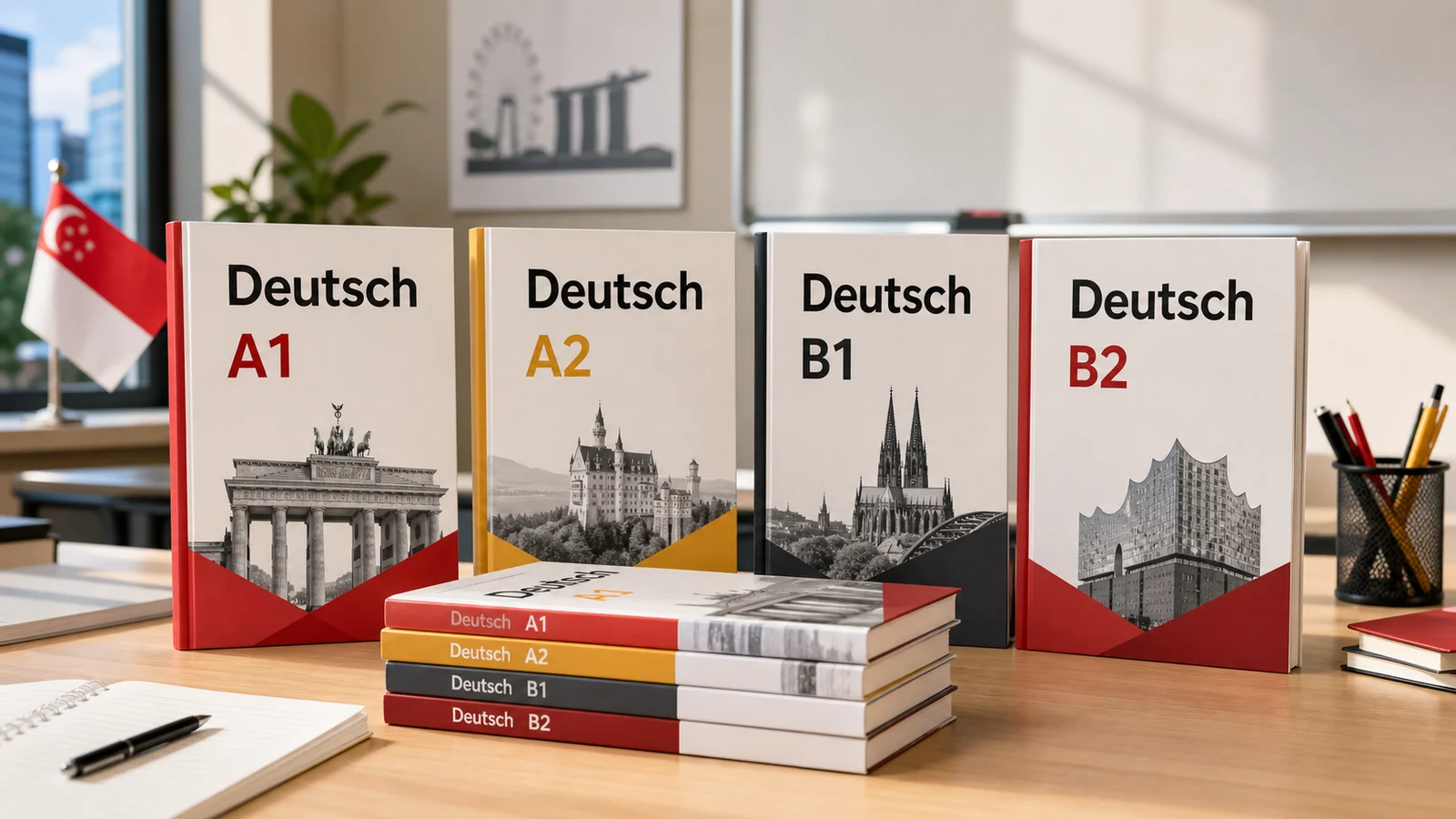
See how Eurolingo structures German lessons from Beginner A1 to higher levels, with separate guidance for adults, children, teens, exams, private tuition and online lessons.
German course levels
Eurolingo follows the Common European Framework of Reference for Languages, usually called CEFR. The framework makes it easier to understand whether a course is beginner, elementary, intermediate or advanced, and it helps learners compare German courses in Singapore more clearly.
The adult pathway is modular, so you can plan your time and budget before committing to the next stage. That clear structure is useful if you want serious German teaching without the weight of a large institutional programme.
How to choose
Build the first practical foundations: pronunciation, greetings, personal information, numbers, daily routines, simple questions and short everyday exchanges.
Extend everyday communication with past events, plans, appointments, travel, shopping, simple opinions and longer listening or reading tasks.
Move toward independent communication with clearer grammar control, connected speaking, guided writing and confidence handling familiar real-life situations.
Develop more precise German for study, work, discussion, presentations, advanced reading and more nuanced written communication.
Adult syllabus
Adult group classes are organised as manageable modules. The exact textbook and pace may vary by level and intake, but the learning path keeps the same aim: build usable German step by step through speaking, listening, reading, writing and grammar practice.
Start speaking from the first lesson with pronunciation, introductions, numbers, classroom language and simple present-tense structures.
Complete beginners
Build daily-life vocabulary, questions, word order, articles, basic cases and short conversations around familiar situations.
After Beginner 1 or placement advice
Extend A1 communication with routine tasks, modal verbs, separable verbs, simple past references and more listening practice.
After Beginner 2
Consolidate A1 foundations and prepare for practical A1 outcomes, including reading, writing, listening and speaking tasks.
After Beginner 3
Develop longer conversations, past events, directions, appointments, travel situations, opinions and stronger sentence structure.
After A1 or placement advice
Strengthen independent communication, connected writing, listening comprehension, grammar accuracy and topic-based vocabulary.
After A2 or placement advice
Children and teens
Children classes build primary-age foundations with age-appropriate routines. Teens and international-school exam learners follow a more structured route for school support, German-in-lieu, Cambridge IGCSE German, IB German ab initio or German B, and Goethe-Zertifikat goals.
Private and online
Private and online German lessons can follow the same CEFR pathway, but the teacher can adjust pace, revision, homework and exam focus around the learner’s schedule and target outcome.